State PT, हर rupee तक deducted। deducted
सभी 19 Indian states जो Article 276 के under Professional Tax लेते हैं — Maharashtra का ₹200/₹300 February rule, Karnataka का women-below-₹25,000 exemption, Tamil Nadu का half-yearly cycle, West Bengal Form III। Slab एक बार set करें, और अगले मेहीने से हर payslip पर सही deduction लग जाता है — accountant को कुछ नहीं touch करना पड़ता।
अधिकतर Indian schools आज Professional Tax कैसे handle करते हैं
हर महीने की 25 तारीख को, Pune के एक CBSE school का office accountant salary Excel खोलकर PT column को manually edit करना शुरू करता है। अधिकतर teachers के लिए ₹200। February में senior PGT के लिए ₹300 (क्योंकि Maharashtra ₹2,500/year ₹200 × 11 + ₹300 February में लेता है)। ₹6,800 कमाने वाली office की लड़की के लिए ₹0 (Maharashtra के ₹7,500 threshold से नीचे)। वो पिछले साल की logic दूसरी sheet से copy करती है, उम्मीद करती है कि slab सही आ गया, और file principal को email कर देती है।
April में auditor तीन issues find करता है। नवंबर में join होने वाली Hindi teacher गलत slab पर थी। Drawing teacher जो December में ₹10,000 cross कर गई वो ₹175 पर ही रही। और February का PT challan जो file हुआ वो सबके लिए ₹200 दिखा रहा था — office में किसी को Maharashtra का Feb-300 rule पता ही नहीं था। दो penalty notices के बाद, principal पूछता है: '2026 में हम ये काम manually क्यों कर रहे हैं?'
Professional Tax Article 276 of the Constitution के under collect होता है, और per employee per year ₹2,500 तक capped है। लेकिन हर state में पहुंचने का तरीका अलग है — Maharashtra में February split, Karnataka में women-below-₹25,000 exempt, Tamil Nadu में April और October में half-yearly tranches, West Bengal में Form III monthly। Pune का school Bengaluru की logic use नहीं कर सकता, और तीन states में branches वाले school को तीनों चाहिए। Inkwelly का Professional Tax Slab configurator इसे एक बार में solve करता है।
Inkwelly का PT Slab configurator क्या करता है
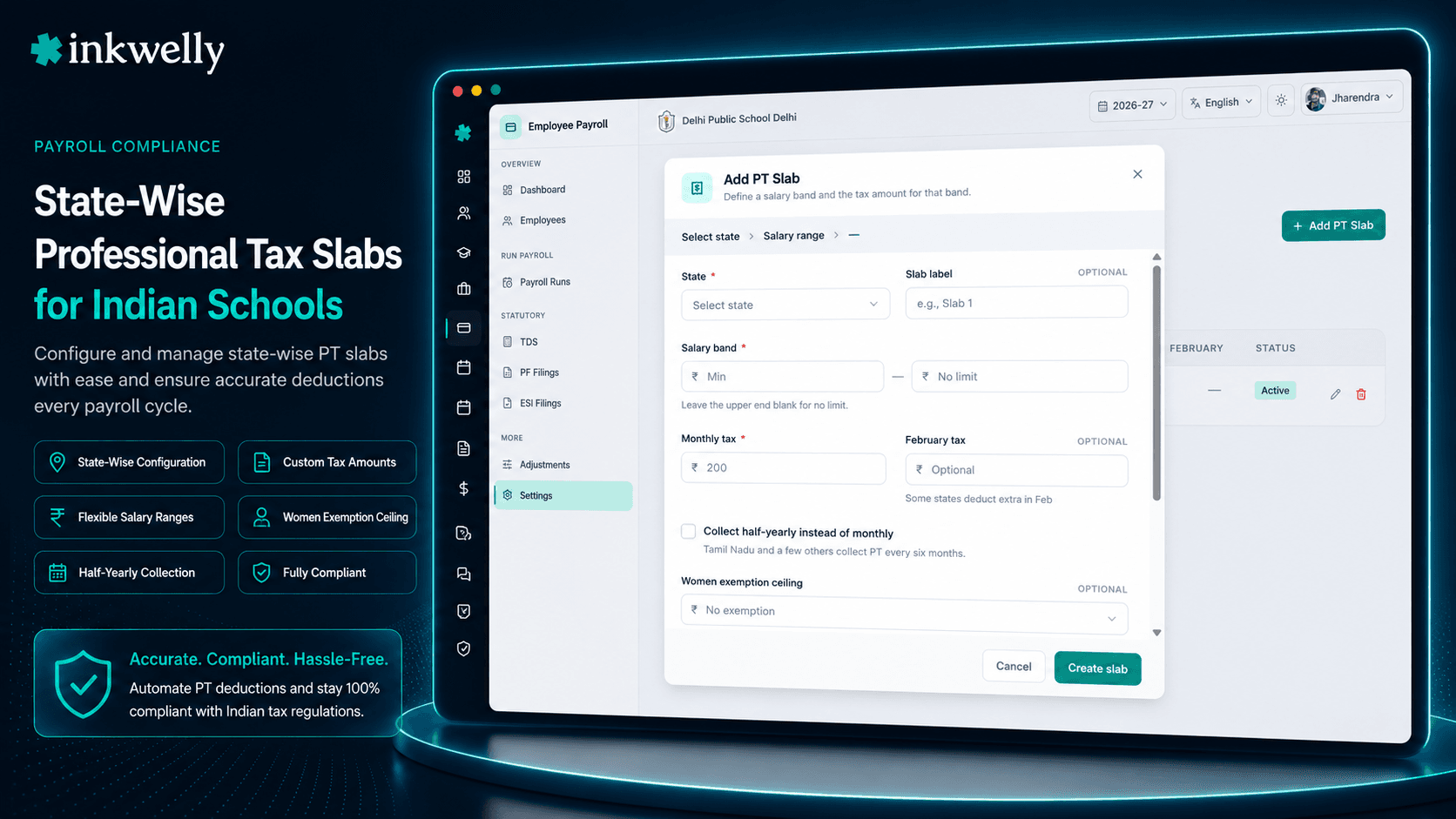
Office accountant financial year की शुरुआत में एक बार Employee Payroll → Settings → PT Slabs खोलती है। वो एक dropdown से state choose करती है जिसमें सभी 19 PT-levying states listed हैं — Maharashtra (MH), Karnataka (KA), Gujarat (GJ), Tamil Nadu (TN), West Bengal (WB), Andhra Pradesh (AP), Telangana (TS), Madhya Pradesh (MP), Kerala (KL), Bihar (BR), Odisha (OR), Jharkhand (JH), Chhattisgarh (CG), Assam (AS), plus चार जो PT levy नहीं करते लेकिन consistency के लिए selectable रखे गए हैं (Delhi, Rajasthan, UP, Haryana, Punjab — unified config preferred करने वाले schools के लिए)।
हर state के लिए वो एक slab row enter करती है: salary band (Min Salary और Max Salary), Monthly Amount, optional February Amount Maharashtra rule के लिए, Effective From date, और slab transitions के लिए optional Effective To। अगर state half-yearly collect करता है (Tamil Nadu, parts of West Bengal), तो वो Is Half-Yearly tick करती है और एक ही Half-Yearly Amount enter करती है। अगर state में women-exemption rule है (Karnataka), तो वो Women Exempt Limit enter करती है — ₹25,000 कहो — और system automatically उस cap से नीचे कमाने वाली women के लिए PT zero कर देता है।
बस इतना ही। अगले payrun से, org में हर school के हर payroll के हर employee को सही state PT मिलता है। Accountant फिर कभी payslip पर PT column को touch नहीं करती। हर payslip पर वो amount componentCode: 'PT' के साथ appear होता है, Form 24Q quarterly TDS return पर (क्योंकि PT Section 16(iii) of the Income Tax Act के under deductible है), और year-end Form 16 पर — auto-reconciled, बिना manual entry के।
Out of the box क्या-क्या covered है
- सभी 19 PT-levying states pre-loaded as dropdown — state codes ढूंढने की ज़रूरत नहीं (MH, KA, GJ, TN, WB, AP, TS, UP, RJ, MP, KL, PB, HR, BR, OR, JH, CG, AS)
- Maharashtra ₹200/₹300 February split — एकमात्र state जहां February amount अलग है; एक separate
februaryAmountfield के रूप में encoded, सिर्फ February payruns में automatically applied - Karnataka women-exemption —
womenExemptLimitfield; ₹25,000 से नीचे कमाने वाली women को Karnataka Tax on Professions Act 1976 के under ₹0 PT - Tamil Nadu half-yearly cycle —
isHalfYearlytoggle करें और एक half-yearly amount enter करें; system TN Panchayats / Municipalities PT rules के अनुसार employee को April और October में bill करता है - West Bengal Form III monthly — WB slab structure support करता है alag-alag slabs के साथ ₹10,001–₹15,000, ₹15,001–₹25,000, ₹25,001–₹40,000, और ₹40,000 से ऊपर के लिए
- Salary band overlap detection — अगर आप गलती से ₹7,501–₹10,000 का slab बनाने की कोशिश करते हैं जब ₹5,000–₹12,000 का already exists, तो system save से पहले
SALARY_RANGE_OVERLAPके साथ reject करता है - Effective-date versioning — जब state slabs revise करता है (Maharashtra ने April 2024 में बदला), तो old slab को
effectiveToसे close करें और नया add करें; payruns automatically payDate के basis पर सही slab use करते हैं - Soft-delete protection — posted payslips में already used slabs कभी hard-delete नहीं हो सकते; system flag करता है
deactivated (soft deleted) as it is referenced in payroll recordsऔर audit trail रखता है - Org-scoped, school-aware — एक config आपके org के सभी schools को power देता है, लेकिन हर school का payrun school के registered state के against PT resolve करता है
- Section 16(iii) IT linkage — हर PT deduction automatically Form 16 box 3 (deduction under Section 16) और Form 24Q quarterly TDS में flow करता है — बिना re-entry के
Maharashtra — Feb-300 rule, encoded
Maharashtra ही एकमात्र Indian state है जहां February PT बाकी हर महीने से अलग है। Maharashtra State Tax on Professions, Trades, Callings and Employments Act 1975 के under, employers 11 महीने ₹200 collect करते हैं और February में ₹300 — Article 276 द्वारा allowed ₹2,500 annual cap को total करता है। अधिकतर ERPs जिन्हें हम replace करते हैं वो या तो February rule skip कर देते हैं (₹100/employee/year under-deduct करते हैं, जो auditor catch करता है) या इसे code में hard-code करते हैं (और जब Maharashtra rates revise करता है तो break हो जाते हैं)।
Inkwelly इसे data layer पर handle करता है। हर Maharashtra slab में monthlyAmount और februaryAmount दोनों होते हैं। जब March payrun चलता है (जो February के काम के लिए pay करता है), engine slab read करता है, februaryAmount: 300 देखता है, और senior PGT के payslip से ₹300 deduct करता है — बिना office में किसी को rule remember किए। Principal logic instantly audit कर सकता है: slab row खोलो, ₹200 / ₹300 spelled out देखो।
Karnataka — women-below-₹25,000 exemption, declarative
Karnataka Tax on Professions, Trades, Callings and Employments Act 1976 ₹25,000/month से नीचे कमाने वाली women employees को PT से exempt करता है — एक real exemption जो manually handle करने पर schools का time खाता है (office को female staff filter करना पड़ता है, salary check करनी पड़ती है, PT column zero करना पड़ता है, और auditor को women's roster के साथ prove करना पड़ता है)।
Inkwelly में, Karnataka slab में womenExemptLimit field है। एक बार इसे ₹25,000 set करें। अगले payrun से, ₹25,000 से नीचे कमाने वाली हर female employee को automatically ₹0 PT मिलता है; audit log slab ID और employee profile पर gender field के साथ exemption applied दिखाता है। 18 female teachers cap के नीचे वाला Bengaluru school per teacher per year ₹2,150 बचाता है — और office के 30 minutes/month भी।
Tamil Nadu — half-yearly billing, no calendar maths
Tamil Nadu PT panchayat या municipality द्वारा collect होता है — state द्वारा नहीं — और साल में दो बार bill होता है, April और October में। Amount half-year salary band पर depend करती है, monthly नहीं। Coimbatore school का payrun Maharashtra की तरह ₹208/month deduct नहीं कर सकता; वो साल में दो बार slab के अनुसार lump sum withhold करता है।
TN slab पर isHalfYearly को true flick करें और halfYearlyAmount enter करें। Inkwelly का payrun engine April और October को छोड़कर किसी भी महीने में PT deduct नहीं करता — और उन महीनों में, running gross से half-yearly figure deduct करता है। Challan generator panchayat-format Form 1 output करता है half-yearly figure pre-filled। कोई accountant decisions नहीं, कोई spreadsheet acrobatics नहीं।
Multi-state schools — एक config, तीन states, zero overlap
Pune, Bengaluru, और Coimbatore में branches वाली एक growing school chain को simultaneously तीन अलग-अलग PT regimes चाहिए। अधिकतर ERPs आपको per organisation एक state pick करने पर force करते हैं; Inkwelly slab level पर org-scoped है लेकिन payrun time पर state-resolved। आप तीनों states को एक screen में configure करते हैं — Maharashtra Feb-300 के साथ, Karnataka women-exempt के साथ, Tamil Nadu half-yearly के साथ — और हर branch का payrun automatically school के registered state को read करता है।
System overlap mistakes भी block करता है। अगर आप ₹7,501–₹10,000 का Maharashtra slab add करने की कोशिश करते हैं जब ₹5,000–₹12,000 का already cover करता है, तो validator save से पहले SALARY_RANGE_OVERLAP return करता है। कोई silent corruption नहीं। हर change timestamped है और एक user से tied है — तो अगर auditor पूछे 'women-exempt limit ₹25,000 किसने set किया?', audit log में answer है।
“Pehle har mahine PT column manually edit karte the. Maharashtra ke teen branches ke liye alag-alag rules yaad rakhte the. Ab slab ek baar set kiya, March payrun mein automatically Feb-300 lag gaya. Auditor ko 30 second mein dikha diya.”
Real-world use cases — पांच scenarios जो वाकई Indian schools में होते हैं
1. Maharashtra senior teacher December में ₹10,000 band cross करती है। Drawing teacher को December में 12% increment मिलता है जो उसे ₹10,200 gross पर push करता है। December payrun से, Inkwelly automatically ₹175 slab की जगह ₹200/₹300 slab apply करता है — कोई edits ज़रूरी नहीं। February में, उसके लिए automatically ₹300 deduct होता है; March payslip ₹200 resume करता है।
2. नया PGT mid-year में Karnataka school join करता है। Bengaluru school October में ₹62,000/month पर एक male PGT hire करता है। October से उसका PT automatically ₹200/month deduct होता है (Karnataka top slab)। उसका Form 16 year-end पर Section 16(iii) के under prorated ₹1,200 दिखाता है। कोई re-entry नहीं, कोई slab guessing नहीं।
3. Tamil Nadu school का October half-yearly run। Madurai school का October payrun एक shot में सभी 38 staff के लिए half-yearly PT carry करता है। Challan panchayat-format CSV के रूप में export होता है। April challan already pay हो चुका था; system दोनों को audit log में 'closed' दिखाता है।
4. School chain Maharashtra से Karnataka में expand करता है। April-2026 में Pune school Bengaluru में branch खोलता है। Accountant women-exempt-₹25,000 के साथ एक Karnataka slab add करता है। May से, Bengaluru staff को Karnataka PT मिलता है, Pune staff Maharashtra PT पर continue करता है। कोई re-implementation नहीं, कोई consultant call नहीं।
5. State mid-financial-year में slab rates revise करता है।
Maharashtra 1 July 2026 effective rates revise करता है। Accountant old slab पर effectiveTo: 2026-06-30 set करता है और 2026-07-01 से एक new slab add करता है। June का payrun old rates use करता है; July का new। February-2027 का run new slab read करता है — और new February amount apply करता है।
Office हर महीने जो common operations चलाता है
- एक नया state slab set करें — एक dropdown, तीन numbers, एक date
- एक existing slab edit करें — same dialog खुलता है, posted payslips द्वारा locked को छोड़कर सभी fields editable
- एक old slab soft-delete करें — audit trail preserve करता है, नए payruns को इसे pick करने से रोकता है
- State name ("Maharashtra") या slab name ("Senior Band") से search करें — debounced 500ms
- FY-end clean up के लिए active-only या inactive-only से filter करें
- Multi-state, multi-FY history हो तो page पर 20 slabs paginate करें
- FY की slab history को auditor के लिए CSV के रूप में export करें
- Slab में drill करें audit trail देखने के लिए — किसने create किया, last edit कब हुआ
- Rare cases में single payslip पर slab override करें — override log होता है
- Slabs को next FY में एक click में roll forward करें — active set copy होता है, आप सिर्फ changes edit करते हैं
अपने state के लिए configured PT Slabs 20 minutes में देखें
अपने actual state के rules के साथ demo — Maharashtra, Karnataka, Tamil Nadu, या 19 में से कोई। हम slab rates pre-load करते हैं ताकि आप commit करने से पहले अपना March payrun देख सकें।
Limits, safety, और small print
PT org-scoped है, school-scoped नहीं — आप पूरे organisation के लिए एक बार configure करते हैं, और हर school का payrun school के registered state से match करने वाले slab पर resolve होता है। यह design से है: अधिकतर groups में एक accountant होता है जो branches across PT manage करता है, और per-school PT configurations rokne से ज़्यादा drift create करते हैं।
Slabs effective-date versioning use करते हैं। जब state rates revise करता है (Maharashtra ने पिछले पांच साल में दो बार किया है), तो आप old slab को edit नहीं करते — आप old पर effectiveTo set करते हैं और rate-change date से एक new slab create करते हैं। Payruns हमेशा वो slab read करते हैं जिसका effective period payDate को contain करता है। एक old payrun को re-run करने पर same answer मिलता है; इस महीने का payrun चलाने पर new slab use होता है। कोई retroactive edits नहीं, कोई audit drift नहीं।
Soft-delete UI नहीं, backend द्वारा enforce होता है। अगर slab एक भी posted payslip में use हुआ है, तो system deleteType: 'soft' return करता है और isActive=false set करता है — कभी 'hard' नहीं। यह difference है 'मुझे यह slab gone चाहिए' (UX request) और 'यह slab safely history से remove हो सकता है' (audit reality) के बीच का। Auditor हमेशा वो slab देखेगा जो payslip post होते समय active था।
Maharashtra का februaryAmount field schema में एकमात्र state-specific quirk है — हर दूसरा state सिर्फ monthlyAmount या halfYearlyAmount use करता है। Karnataka का women-exemption एक separate field (womenExemptLimit) है ताकि non-Karnataka slabs को pollute न करे। 19-state dropdown closed है (/^[A-Z]{2,3}$/) तो आप गलती से 'KARN' या 'MAH' enter नहीं कर सकते — सिर्फ official 2–3 letter ISO-style codes।
जिन schools का state PT levy नहीं करता (Delhi, Haryana, Punjab — Article 276 के under full list), उस state के लिए slab बस create न करें। Payrun PT line item entirely skip कर देगा और Form 16 Section 16(iii) PT के under ₹0 दिखाएगा। Slab न होने पर कोई penalty नहीं है; सिर्फ wrong होने पर है।
किस मॉड्यूल का हिस्सा
1 moduleअक्सर पूछे गए सवाल
8 सवालक्या Inkwelly सभी 19 Indian states को support करता है जो Professional Tax levy करते हैं?
हां। State dropdown में Maharashtra, Karnataka, Gujarat, Tamil Nadu, West Bengal, Andhra Pradesh, Telangana, Madhya Pradesh, Kerala, Bihar, Odisha, Jharkhand, Chhattisgarh, Assam, plus Delhi, Rajasthan, UP, Haryana, और Punjab listed हैं (org-consistency के लिए रखे गए हैं भले ही PT levy नहीं करते)। हर state के specific rules — Maharashtra Feb-300, Karnataka women-exempt, Tamil Nadu half-yearly — fields के रूप में encoded हैं, hard-coded नहीं।
आप Maharashtra का ₹200/₹300 February rule कैसे handle करते हैं?
हर Maharashtra slab में दो fields हैं: `monthlyAmount` (e.g., ₹200) और `februaryAmount` (e.g., ₹300)। जब engine February payrun process करता है, तो वो `monthlyAmount` की जगह `februaryAmount` read करता है — automatically। आप slab पर rule एक बार set करते हैं; उसके बाद हर February payrun इसे apply करता है बिना office में किसी को remember किए।
Karnataka women-below-₹25,000 exemption के बारे में क्या?
Karnataka slabs में `womenExemptLimit` field है। इसे ₹25,000 set करें। Payrun engine फिर automatically उस cap से नीचे कमाने वाली हर female employee के लिए PT zero कर देता है। Exemption payslip के audit trail पर slab ID के साथ logged होता है, ताकि auditors verify कर सकें कि rule सही apply हुआ।
क्या 3 states में operate करने वाला school chain एक PT configuration use कर सकता है?
हां। PT slabs org-scoped हैं — एक configuration आपके organisation के हर school को power देता है। हर school का payrun school के registered state के against PT resolve करता है, तो Pune branch Maharashtra slabs use करती है, Bengaluru branch Karnataka slabs, और Coimbatore branch Tamil Nadu half-yearly slabs — same admin screen से।
अगर state mid-year में अपने PT rates revise करे तो क्या होता है?
आप old slab edit नहीं करते। Old slab पर `effectiveTo` को revision से एक day पहले set करें, फिर revision date से एक new slab create करें। Payruns हमेशा वो slab read करते हैं जिसका effective period payDate को contain करता है। Old payrun re-runs को old rate मिलती है; new payruns को new rate। कोई retroactive edits नहीं, कोई audit drift नहीं।
क्या मैं ऐसा slab delete कर सकता हूं जो पहले से payslips में use हो रहा है?
नहीं — backend hard-delete को block करता है और इसके बजाय soft-delete perform करता है। Slab `isActive=false` के साथ marked होता है और message *'Professional tax slab deactivated (soft deleted) as it is referenced in payroll records'* के साथ history में रहता है। Auditors अभी भी वो slab देख सकते हैं जो हर historical payslip post होने के समय active था।
क्या PT automatically Form 16 और Form 24Q पर appear होता है?
हां। PT **Section 16(iii) of the Income Tax Act 1961** के under deductible है। हर PT deduction automatically Form 16 box 3 (Deduction under Section 16) और Form 24Q quarterly TDS return में flow करता है — कोई re-entry नहीं। Form 16 पर amount payslips पर monthly PT deductions के sum से reconcile होता है।
PT data कहां stored है, और कितने समय तक retain होता है?
सभी PT slab data Inkwelly के Mumbai infrastructure पर stored है, DPDP Act 2023 के साथ compliant। Slabs और उनका audit trail 7 years के लिए retained है (अधिकतर state PT acts और Income Tax Act के under standard payroll record retention required)। Soft-deleted slabs historical payslip references के लिए indefinitely रखे जाते हैं।
आपको ये भी पसंद आ सकता है
2 लेखInkwelly आपके स्कूल पर — खुद देखें
30 मिनट का डेमो। आपके मौजूदा ERP को आपके साथ खोलकर, कॉल पर ही आपका डेटा Inkwelly में लोड करते हैं। कॉल ख़त्म होते-होते एक तय तारीख़ का गो-लाइव प्लान आपके हाथ में।